
Mosaic Languages shares practical, down-to-earth guidance on language learning, teaching and multilingual family life in the uk for readers across the UK.
- 0123456789
- Angle Bd Abdelmoumen & rue soumaya, Résidence
- [email protected]
Mosaic Languages shares practical, down-to-earth guidance on language learning, teaching and multilingual family life in the uk for readers across the UK.
 By Callum Fraser
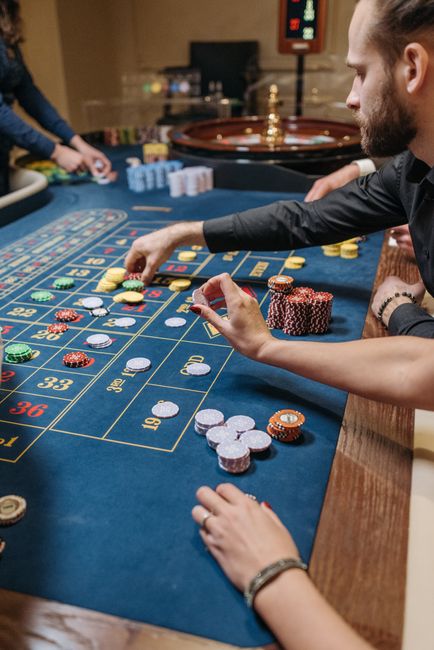
There's a moment every gambler knows. Your finger hovers over the spin button, the dealer flips the river card, or the roulette ball starts its lazy descent — and for a split second, everything is possible. That little jolt of anticipation is why the iGaming industry is worth well over $100 billion globally. But strip away the neon graphics and the slick mobile apps, and you'll find one thing underneath: human psychology meeting probability. Understanding that intersection is the difference between playing smart and playing broke.
Let's start with the uncomfortable truth. Every casino game is built so the operator makes money over time. That's not cynicism; it's just the arithmetic. The key number is the house edge, and it varies wildly between games.
If you take one thing from this article, make it this: the games you choose matter more than the luck you feel. A player grinding 3:2 blackjack with a small edge can survive a session that would obliterate a slots player feeding the same bankroll into a 92% RTP machine. Slots are fun — genuinely fun — but they're entertainment, not an income strategy.
Slot designers are not naive. They've spent decades studying what makes players keep spinning, and near-misses are their finest tool. When two reels land on the jackpot symbol and the third barely misses, your brain registers it almost the same as a win. Dopamine fires, and you press again. Slot volatility — the size and frequency of payouts — is deliberately tuned so players experience enough small wins to stay engaged while the house edge quietly grinds away at their balance.
The same trick appears in poker. A bad beat story is a near-miss elevated to an art form. You had aces cracked by seven-deuce offsuit, and it stings because your brain focuses on how close you were, not on the fact that you made the correct decision and lost anyway. Good poker players learn to separate process from outcome. Bad players chase the story.
Nothing in iGaming extends your entertainment value like disciplined bankroll management. It's boring advice, and it's the advice that actually works.
Poker adds another layer here. In cash games, a standard buy-in is 100 big blinds. If you sit with $200 at a $1/$2 table, that's your stack, and you should reload only against players you've identified as weaker than you. In tournaments, your buy-in should be no more than 2% of your poker bankroll — a rule that has kept professional players alive through brutal downswings.
Two numbers govern every slot machine's personality: return to player (RTP) and volatility. RTP is the theoretical percentage returned to players over millions of spins — a 96% RTP game keeps 4% for the house in the long run. Volatility describes how those returns are distributed. For up-to-date information, visit สล็อต.
Low-volatility slots pay smaller amounts more often. They suit players who want a longer, steadier session. High-volatility slots, like many of the Megaways titles, can go hundreds of spins without a single meaningful payout, then deliver a 5,000x multiplier. Players often choose high volatility for the possibility of a big hit, then complain when their bankroll vanishes in 20 minutes. That's not bad luck; that's choosing a machine that matches someone else's risk profile.
If you enjoy high-volatility slots, size your bets as if you'll lose ten times in a row — because you might. A 30-cent spin with a $100 bankroll survives far longer than five-dollar spins with the same balance.
Poker is the only major iGaming format where skilled players can hold a long-term edge. That edge doesn't come from knowing the rules; it comes from understanding position and aggression. Acting last gives you information — you see what your opponents do before you decide. Tight-aggressive play, where you fold most hands but bet strongly with the ones you play, remains the bedrock strategy for almost every winning player at low and mid stakes.
Also, track your results. If you're not noting wins, losses, and hours played, you're guessing about your own skill level. Most players seriously overestimate it. Poker variance is huge, and 20,000 hands is a more honest sample than a good weekend.
Live dealer games stream from studios in Malta, Latvia, and Romania, blending digital convenience with a physical table and a real croupier. Crypto casinos have carved out a niche by promising provably fair mechanics, though licensing standards vary. Mobile-first design means most players never open a desktop client at all. Regulators in the UK, Sweden, and several US states are tightening responsible gambling requirements, which is broadly a good thing — but it does mean terms and bonus rules are getting more complex, so read them.
iGaming is entertainment dressed in mathematics. The house edge is real and constant, your psychology is the variable, and your bankroll is the scoreboard. Pick games with reasonable edges, manage your money with the same discipline you'd apply to your electricity bill, take breaks, and never confuse a near-miss with a strategy. Play like someone who plans to come back next month — because the smartest players always do.


We are not gonna make spamming
