
Mosaic Languages shares practical, down-to-earth guidance on language learning, teaching and multilingual family life in the uk for readers across the UK.
- 0123456789
- Angle Bd Abdelmoumen & rue soumaya, Résidence
- [email protected]
Mosaic Languages shares practical, down-to-earth guidance on language learning, teaching and multilingual family life in the uk for readers across the UK.
 By Priya Patel
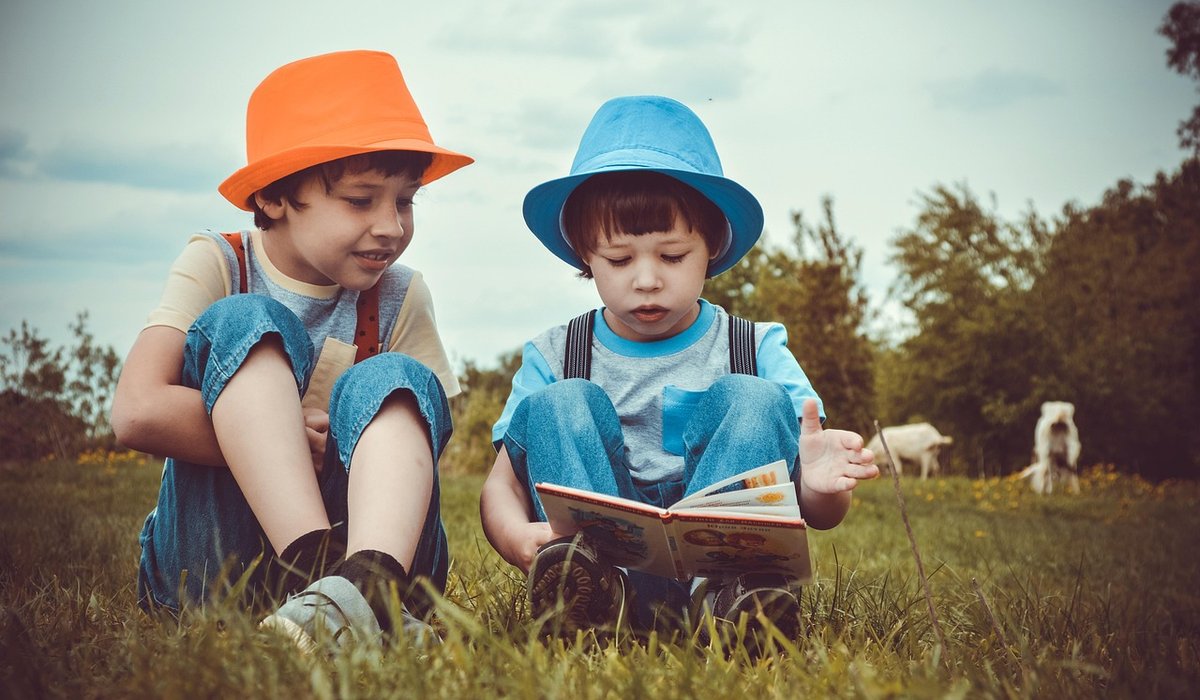
When a child starts Reception, something shifts. English arrives from every direction — the register, the playground, the reading scheme, the dinner queue — and the home language suddenly has fewer hours in the day. Bilingual books are one of the simplest ways to keep both languages present, but a poorly chosen one can make bedtime feel like homework. A well-chosen one does the opposite: it gives you ten minutes of proper story, with the words your child already knows sitting beside the words they are meeting at school. That is why it is worth spending a little time choosing rather than grabbing whatever happens to be on the shelf.
The first test of any dual-language picture book is simple: can you read it out loud at the end of a long day without stumbling? Look for text where the two languages are laid out line by line, so the reader can follow one version and glance at the other without losing the thread. Sentences should be short, and both versions should say roughly the same thing in roughly the same space on the page.
In a bilingual book, pictures have an extra job. They need to explain the story to a child who understands one language better than the other on any given page. Good illustrations make things clear — a red bus, a lost shoe, a grandmother's hands — and the expressions are readable from the other side of the bed. Weak ones simply repeat the text without adding anything.
It also pays to look at whose world is being drawn. Do the children look like your child? Do the streets, kitchens, gardens and shops feel familiar? A book set in a snowy generic village is not wrong, but a book where someone eats the food you eat on a Friday, or where a grandmother rings from abroad, tends to get requested again and again.
Children this age are busy working out the ordinary business of being a person: making a friend, losing a tooth, being brave at the dentist, starting a new class, missing someone. Books about those experiences let a child rehearse them safely inside a story, and doing that in two languages doubles the usefulness.
If your child sees themselves in the pictures and the plot, the second language stops being a subject and becomes part of the story.
You can assess most dual-language picture books in five minutes, standing in a library or a community centre.
Ten minutes at roughly the same time each day beats an ambitious plan that collapses by Wednesday. Let your child choose the book, even if it is the same one for a fortnight. Read the home language first if that keeps the story warm and unhurried, then let your child tell you what happened in English. Answering in the stronger language is not a failure; it is comprehension.
If your child is learning to read in English at school, point out a word they know and show it in the other language. Seeing the same idea printed twice builds confidence rather than confusion. Where there are older siblings, let them read to the younger one — the audience is less intimidating and the reading practice is real.
Keep the collection small and well loved. Five or six books that get read until the corners soften will do far more for a child's two languages than a shelf of untouched ones. If a book turns out to be a chore, pass it on without guilt and try another.


We are not gonna make spamming
